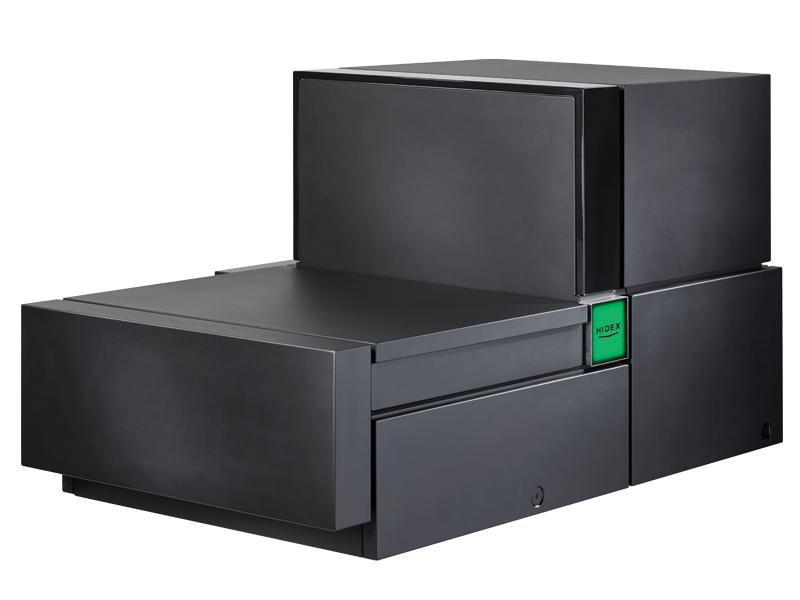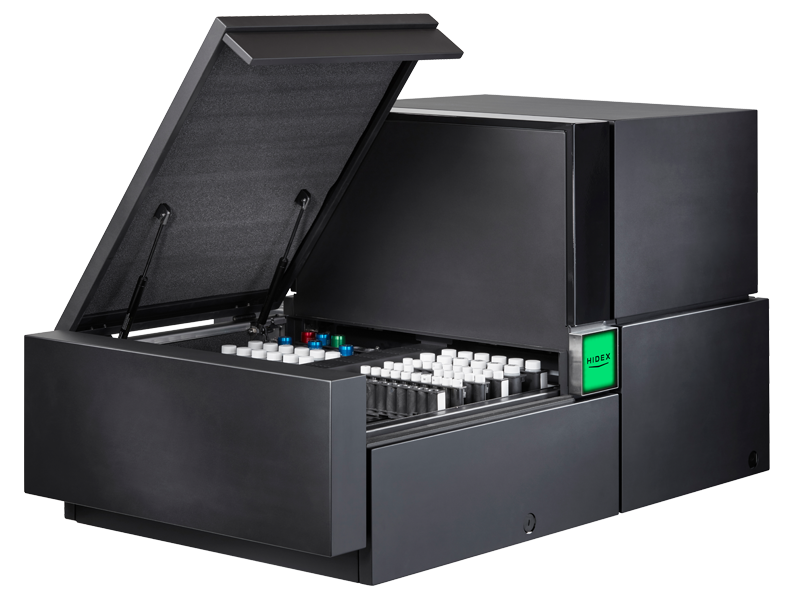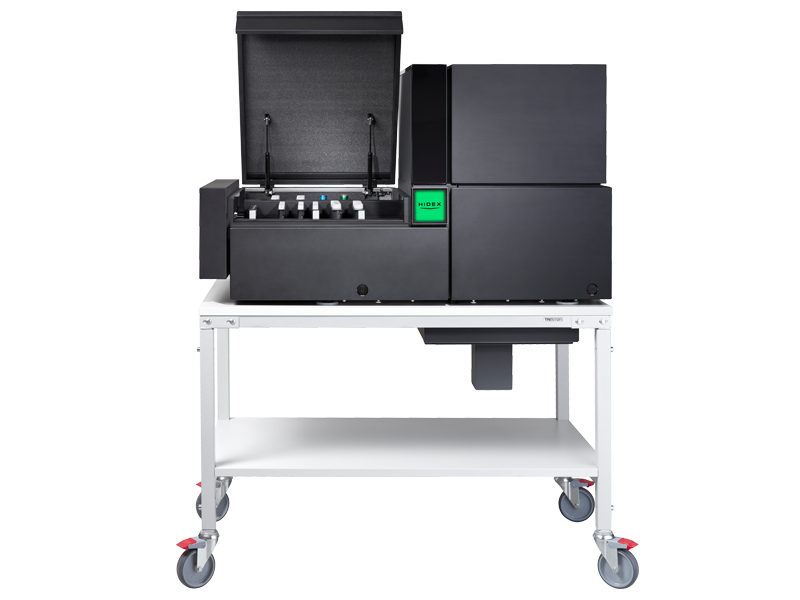
Advanced counting with a high sample capacity

The Hidex 600 SLe is designed to count a greater number of samples with exceptionally high counting efficiency. It has luminescence-free counting and uses three PMTs in place of the conventional two for Triple-to-Double Coincidence Ratio (TDCR), a method for absolute activity counting without the need for an external radiation source for calibration.

The Hidex 600 SLe is an improved model of the legacy Hidex 600 SL. It includes an enhanced cooler with an insulated lid, allowing samples to be cooled in the conveyor. Other new features included improved error handling with more descriptive error messages to facilitate troubleshooting and a sliding detection chamber hood to provide easier access to retrieve stuck vials.

The Hidex 600 SLe is available in different models for specific applications.

Hidex 600 SLe Standard

The standard Hidex 600 SLe is the proven benchmark for high-capacity LSCs. Used in industrial and research applications, a number of optional features are available and can be upgraded on-site post-installation.

Specifications
Sample capacity, 20mL/7mL 200/500/500
Counting efficiency ³H/¹⁴C (%) 70/96
Background ³H in water (CPM) 12
Dimensions (W/H/D) 125 x 69 x 64 cm
Weight 200 kg (441 lbs)

Optional features include:

  • 425-019 External standard with 152Eu source
  • 525-003 Alpha/Beta separation
  • 425-2004 Temperature control
  • 525-604 Sample QR code reader

Hidex 600 SLe Super Low Level

The Hidex 600 SLe Super Low Level counter is designed to count challenging measurements of particularly low levels of radioactivity. It is equipped with additional lead shielding, low-level PMT detectors, and an Active Guard detector for further background reduction. It is ideal for measuring 3H in water as well as other applications such as low-level environmental monitoring, radiocarbon dating, and biofuel verification applications.

Specifications
Sample capacity, 20mL/7mL 200/500/500
Counting efficiency ³H/¹⁴C (%) 70/96
Background ³H in water (CPM) 3
Dimensions (W/H/D) 125 x 69 x 64 cm
Weight 255 kg (562 lbs)

Features

High Sample Load Capacity

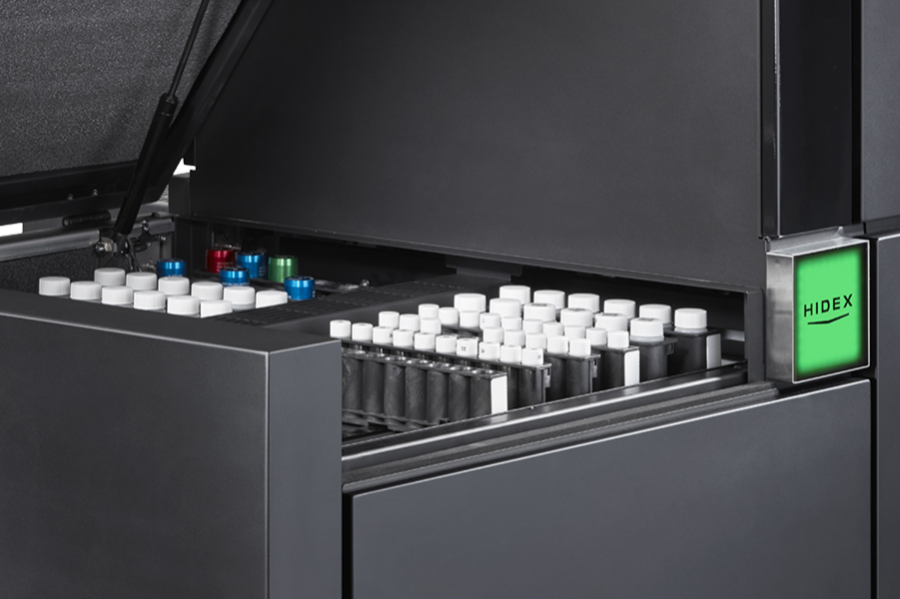
A large sample capacity of 500 small vials or 200 large vials allows laboratories to produce traceable, reproducible quantitative data.

Cooling Conveyor

The cooling conveyor cools samples to 5 °C below ambient room temperature in normal laboratory conditions. The conveyor’s lid is insulated to retain the target temperature for stable sample loading.

Improved Troubleshooting

Descriptive error messages allow users to troubleshoot on-site without having to rely on external support. Additionally, a sliding detection chamber hood provides easier access to retrieve stuck vials.

TDCR

The Hidex 600 SLe uses three PMTs. These are optimally aligned at 120° from each, yielding better detection geometry than conventional double coincidence detectors. This allows Triple-to-Double Coincidence Ratio (TDCR), which is an absolute counting method for obtaining counting efficiency of the samples without an external or internal standard source. Unlike external standard methods, TDCR is a universal method applicable for chemical and colour quenching, for aqueous and organic samples, and for different cocktails and isotopes.

Quench correction using an external standard source is available as an optional feature for users who prefer to continue measurements adhering to ISO methods.

Optional External Standard Source

An optional external 152Eu standard source may be included for additional quench correction for users who prefer to continue measurements adhering to ISO 17025 accredited methods.

Alpha/Beta Separation

Alpha/beta separation is an optional feature of the Hidex 600 SLe. It provides extremely sensitive detection of alpha-emitting isotopes in the presence of high beta radiation. Calibration and results validation can be done using spectrum analysis. Separation even works for unknown mixtures of alpha and beta isotopes.

This reduces the possibility of measurement errors typical for conventional misclassification methods, where calibration is often done using different conditions and isotopes than those found in unknown samples. Typical applications include the detection of 222Rn, 226Ra, 228Ra, 241Am and gross alpha/beta.

Temperature Control

An optional temperature control module cools the detector and sample tray to maintain sample integrity when conducting long count times. Sample temperature stability is especially important in low-level applications, improving the reproducibility of results and cocktail sample mixing properties.

Software Features

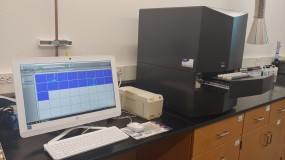
The Hidex 600 SLe is controlled by Hidex’s MikroWin software running on an external computer. Featuring quench curve analysis and half-life correction with an unlimited number of methods for different isotopes, all data can be exported to Excel or other programs.

Software Futureproofing

Other counters typically feature an internal computer physically built-in to the counter itself. If these integrated computers fail, it renders the whole instrument inoperable, whereas the Hidex 600 SLe’s operations are unaffected with software running on any computer. This also allows regular software and operating system updates, meaning users always have access to the latest versions.

Active Guard

Featuring exclusively in the Hidex 600 SLe Super Low Level, the Active Guard is a separate scintillator detector which detects and subtracts real-time background radiation. The guard can be turned off for high-energy samples and does not interfere with alpha/beta separation.

Digital Lead Shield

The Hidex 600 SLe Super Low Level’s digital lead shield is a proprietary Hidex spectral fitting algorithm that decreases the background and improves the uncertainty of the results by utilising spectrum information for active sample tritium counts and background counts.

Applications

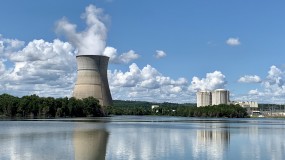
Nuclear Energy

Fission and fusion measurements

Liquid scintillation counting is routinely used in nuclear power for both fission and fusion measurements. The Hidex 600 SLe’s unique three detector PMT detectors can aide in luminescence free counting and radioisotope qualification via TDCR.

Isotope Application Code
3H Tritium in drinking water with TDCR radioisotope qualification ASTM D4107
55F Iron in wastewater with TDCR radioisotope qualification ASTM D4922
14C Carbon in air effluents with luminescence free counting ASTM D7938
3H Tritium in the atmosphere with TDCR radioisotope qualification ASTM D3442

Oil & Gas

Measuring naturally-occurring 14

Liquid scintillation counting is being increasingly used in the oil and gas industries for naturally occurring 14C measurements. The biocontent of renewable fuels such as biodiesel, biogasoline, and sustainable aviation fuels (SAFs) can be measured directly with no sample preparation.  More difficult samples such as marine fuel and biobitumen can be synthesised into benzene and then measured via LSC.

Isotope Application Code
14C Benzene synthesis method ASTM D6866
14C Direct method with no sample preparation ASTM D8473

Environmental & NORM

Counting naturally occurring radioactive materials

Liquid scintillation counting is being for environmental and Naturally Occurring Radioactive Materials (NORM) monitoring. The Hidex 600 SLe’s unique 2D/3D alpha/beta separation leads to zero misclassifications between alpha and beta emitters regardless of isotope keV and isotope mixture.

Isotope Application Code
α/β Gross alpha/beta in water with no misclassification ASTM D7283
222Rn Radon in water with no misclassification ASTM D5072
99Tc Technetium in water with luminescence-free counting ASTM D7168
89Sr/90Sr Strontium in food with unique TDCR Cherenkov ASTM D7362

Existing Hidex 600 SL customers 

Click on the tabs below to find out more about our customers, and how they are using the Hidex 600 SL in their laboratories. 

Washington State Public Health Laboratories, USA

Developing the next generation of Liquid Scintillation Counters for super low-level analysis
The State of Washington in the US has legacy environmental contamination caused by nuclear energy, research, and material production. The Washington State Public Health Laboratories (PHL) is a public facility involved in monitoring sites such as the Hanford Nuclear Reservation, which was originally built as part of the Manhattan Project and used for plutonium production during the Cold War.

Following a rigorous tender process with a demanding specification, PHL procured the original Hidex 600 SL. However, following installation a unique fault occurred due to local conditions, which eventually lead to Hidex redesigning the counter to deliver the new 600 SLe. We spoke to Bud Taylor, Supervisor of PHL’s Environmental and Radiation Chemistry Group, and Chemist Danny Bell about the problem and how it was resolved.

Find out what they had to say by clicking the button below.

READ MORE

Documents

Catalogues

The LabLogic Group will always treat your details with the utmost care and will never sell them to third party companies.

Please choose one of the following:


Previous
Next